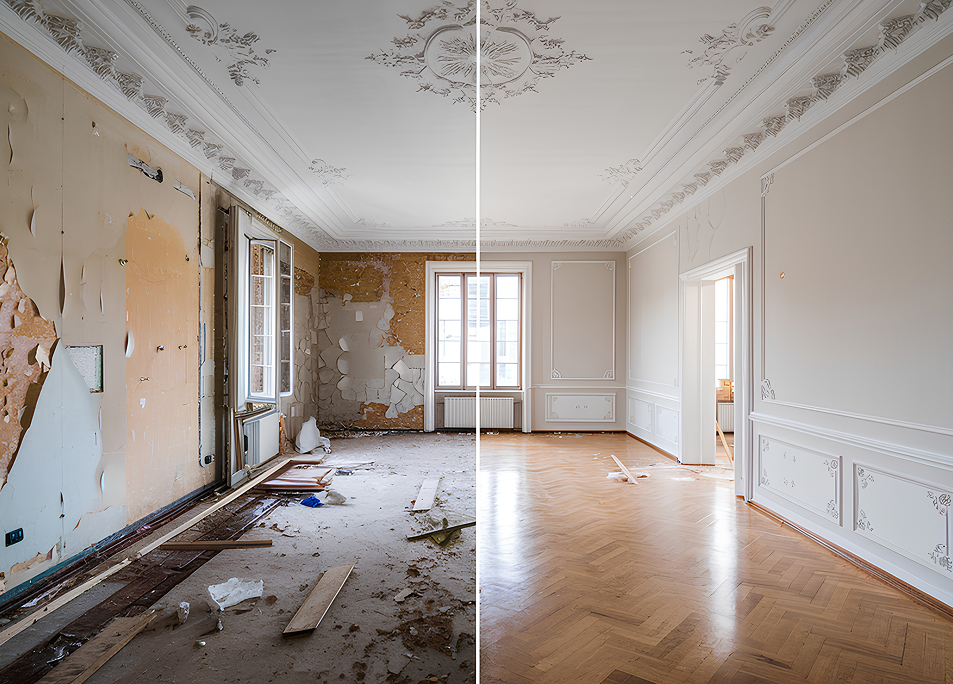
Flood Damage Restoration in Omaha
Around-the-Clock Flood Restoration from a Locally Owned Omaha Team
When water starts pouring into your home or business, every minute matters. Floors, walls, and belongings can go from damp to deeply damaged in a short time, and it can be hard to know what’s safe to touch or what to do first. At Rite Restoration, we provide prompt, professional flood damage restoration for Omaha homes and businesses when water becomes an emergency.
We’re a locally owned restoration company serving Omaha, Sarpy County, and nearby communities. Our team provides emergency restoration services around the clock and guides you through the initial safety assessment, water removal, drying, cleaning, and repair planning.
Heavy rain, storm runoff, a failed sump pump, a burst pipe, a roof leak, or a drain backup can leave water in basements, lower levels, wall cavities, flooring systems, and commercial spaces. Even after visible water is gone, moisture can remain in drywall, insulation, subfloors, and other concealed materials. Without proper water extraction and structural drying, those materials can continue to deteriorate and create conditions where mold can start to grow.
Flood damage can worsen fast: call Rite Restoration now at (402) 787-4895 or contact us online for immediate flood damage restoration service.
Coordinated Flood Repair for Your Entire Property
Choosing someone to handle flood damage is about more than who can arrive first. It’s about who you trust to work in your home or business, make honest recommendations, and stand behind the work once the immediate emergency passes. We’re locally owned. We take responsibility for our recommendations and our work after the immediate emergency passes.
We bring a personal, neighbor-first approach to every project. Our team pays attention to details, protects unaffected areas, and respects your space. Because flooding disrupts daily routines and business operations, we focus on clear communication and coordinated work throughout the restoration.
Flooding can be tied to storm damage, broken pipes, roof leaks, or long-term moisture problems. Because we handle water, fire, smoke, mold, and storm cleanup, we can evaluate damage beyond the visible water. We explain what we find in plain language, outline the available options, and answer your questions before work moves forward.
What to Do When Your Home or Business Floods
Safety takes priority over cleanup speed. Don’t enter standing water when electrical hazards, damaged appliances, sewage, structural instability, or unknown contamination may be present.
Take these steps only when you can do so safely:
- Keep people away: Restrict access to flooded rooms and unstable areas.
- Stop the water source: Shut off the main water supply when a plumbing failure caused the flooding and the valve is safely accessible.
- Protect dry belongings: Move small furniture, electronics, and valuables away from affected areas without crossing standing water.
- Document visible damage: Photograph affected rooms and belongings without disturbing potentially contaminated materials.
- Avoid household equipment: Don’t use household vacuums, power strips, or improvised pumping equipment in wet areas.
Household fans and surface cleanup won’t reveal moisture inside walls, flooring, insulation, or cabinets. As soon as immediate hazards are controlled, contact our team and describe the water source, affected areas, and any known electrical, structural, or contamination concerns. This information helps us prepare for the conditions at your property.
Our Flood Repair & Restoration Process
Our process addresses standing water, moisture retained in building materials, cleanup requirements, and repairs. The exact steps depend on the source and extent of the water, the materials involved, and any safety concerns found during the assessment.
Inspection & Planning
We begin with a careful inspection of the affected areas. Our team evaluates visible water, moisture migration through walls and floors, affected materials, and potential electrical or structural hazards. We explain our findings and discuss a plan for water removal, drying, cleaning, and repairs.
Water Removal & Structural Drying
Water extraction removes standing water, but it’s only the first drying step. We use air movement and dehumidification to draw retained moisture from building materials, then monitor conditions and adjust the drying setup as needed. Moisture detection helps us evaluate areas that may feel dry at the surface while remaining wet underneath or behind finished materials.
Cleaning, Sanitizing & Repairs
Cleaning and sanitizing requirements vary based on the water source and contamination level. We may clean and treat affected surfaces to address concerns related to bacteria or other contaminants. Materials that can’t be cleaned or dried may need to be removed before damaged finishes are repaired.
For damage that can’t be resolved through mitigation alone, we offer reconstruction services to rebuild affected areas. We discuss repair options and keep you updated as the project moves from drying and cleanup into restoration.
Common Flooding Challenges in Omaha
Heavy rainfall and rapid runoff can direct water toward foundations, window wells, basement entries, garage doors, and other low points. Snowmelt, frozen or burst pipes, sump pump failure, and overloaded drains can also cause basement flooding. Because each source presents different contamination and drying concerns, identifying where the water came from is an important part of the assessment.
Commercial flooding can affect inventory, equipment, customer areas, storage rooms, loading areas, and operating space. We account for how the property is used when planning water removal and drying, while residential work may place greater emphasis on occupied rooms, personal belongings, and safe access through the home.
How We Care for Your Property & Belongings
Flood damage isn’t limited to walls and floors. It can affect furniture, equipment, inventory, documents, photographs, and personal items that carry memories or support business operations. We evaluate affected belongings and discuss which items may be cleaned, dried, moved, or unsuitable for continued use.
Salvage decisions depend on the item’s material, the water source, exposure time, contamination, and condition after drying. Solid, nonporous surfaces may allow for different cleaning options than porous items saturated by contaminated water. We explain what we observe so you can make informed decisions about important belongings.
Our team also works to protect unaffected items and maintain an organized work area. We’re careful with your belongings and communicate about specific rooms, business equipment, inventory, or sentimental items that need attention during contents restoration.
If your property has active water intrusion, standing water, or urgent drying needs, call Rite Restoration at (402) 787-4895 or reach out online for professional flood damage restoration.
Frequently Asked Questions
How Quickly Can Your Team Get to My Flooded Property?
We respond as quickly as we reasonably can and prioritize active flooding and standing water situations. Arrival times depend on current weather, call volume during widespread storm events, and your location in the service area. When you call, we can provide a realistic expectation based on conditions at that time.
Is It Safe for Me to Stay in My Home After a Flood?
That depends on the water source, extent of damage, and any electrical, contamination, or structural hazards. Don’t enter areas with sagging ceilings, unstable flooring, sewage, or water near outlets and appliances. Our assessment considers these hazards and whether affected areas can remain occupied while restoration is underway.
What Should I Do Before Your Flood Repair Team Arrives?
If it’s safe, shut off the water supply for a plumbing-related leak and move dry items away from the affected area. Don’t use household vacuums or enter water near electrical sources. Keep people out of unsafe rooms and tell us about the source, affected areas, and hazards when you call.
Can You Help with Mold Concerns After My Home Floods?
We address moisture conditions that can contribute to mold by drying affected materials and evaluating concealed areas. Moisture can remain inside walls, beneath flooring, and in building cavities after surfaces appear dry. If we find mold or signs that mold may already be present, we can discuss the appropriate next steps.
How Long Does Flood Repair Usually Take?
The timeline depends on the amount of water, exposure time, affected materials, contamination, and repairs required. Structural drying can take several days in many situations, while demolition, finish repairs, or reconstruction can extend the project. After the assessment, we explain the expected stages and provide updates if conditions change.
Do You Work with Both Homes & Commercial Properties?
Yes. We work with residential and commercial properties throughout Omaha, Sarpy County, and surrounding areas. Commercial planning may account for inventory, equipment, customer areas, and operating space, while residential projects often involve occupied rooms and personal belongings. We tailor the restoration plan to the property and damage.
How Will I Know What Can Be Saved After a Flood?
We evaluate each item based on its material, the water source, exposure time, contamination, and condition. Some solid surfaces can be cleaned more readily than porous materials that absorbed contaminated water. We explain which items may be cleaned, dried, moved, or unsuitable for continued use and listen to your priorities.



Our Restoration Services
Why Choose Rite Restoration?
-
Integrity in Every ProjectWe believe in honesty, transparency, and doing the right thing the first time, ensuring every client feels confident and supported throughout the restoration process.
-
Compassion Through CrisisWhether it’s a family home or a business facility, we understand the stress of unexpected damage and treat every project with empathy, care, and respect.
-
Excellence Without CompromiseFrom emergency response to full restoration, our team delivers the highest standards of craftsmanship and professionalism to restore not just properties, but peace of mind.

Insured Technicians, Flexible Scheduling & Warranty-Backed Work
Flood restoration often requires quick decisions. Our service commitments provide clear scheduling options and accountability:
- Insured technicians: Our technicians are insured for restoration work in your home or business.
- Insurance coordination: We work directly with insurance providers to help simplify communication during the restoration process.
- Scheduling options: We offer same-day service and weekend appointments.
- Workmanship protection: Our work is backed by warranties.
Start Your Omaha Flood Recovery
When flooding disrupts your home or business, reach out for an assessment of the affected areas and guidance on water removal, structural drying, cleanup, and repair. We can explain the next steps based on the source and extent of the damage.
Our team communicates throughout the project and can coordinate reconstruction when cleaning and drying alone aren’t enough. Free estimates are available for Omaha-area homeowners and businesses that need flood repair help.
For prompt flood repair help, call (402) 787-4895 today.
-
"TEST"This is only a test. Do not adjust your monitor.- Test